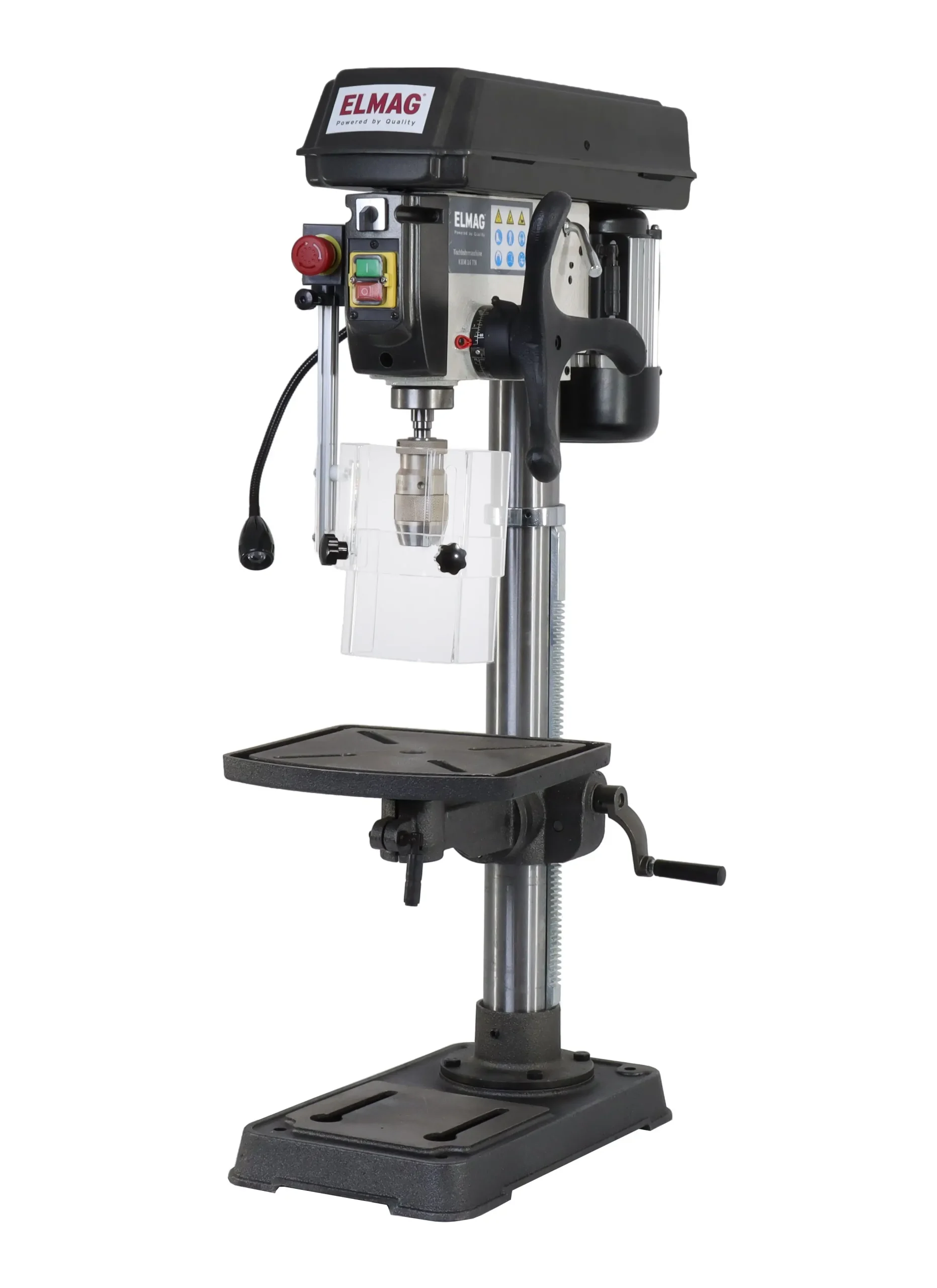
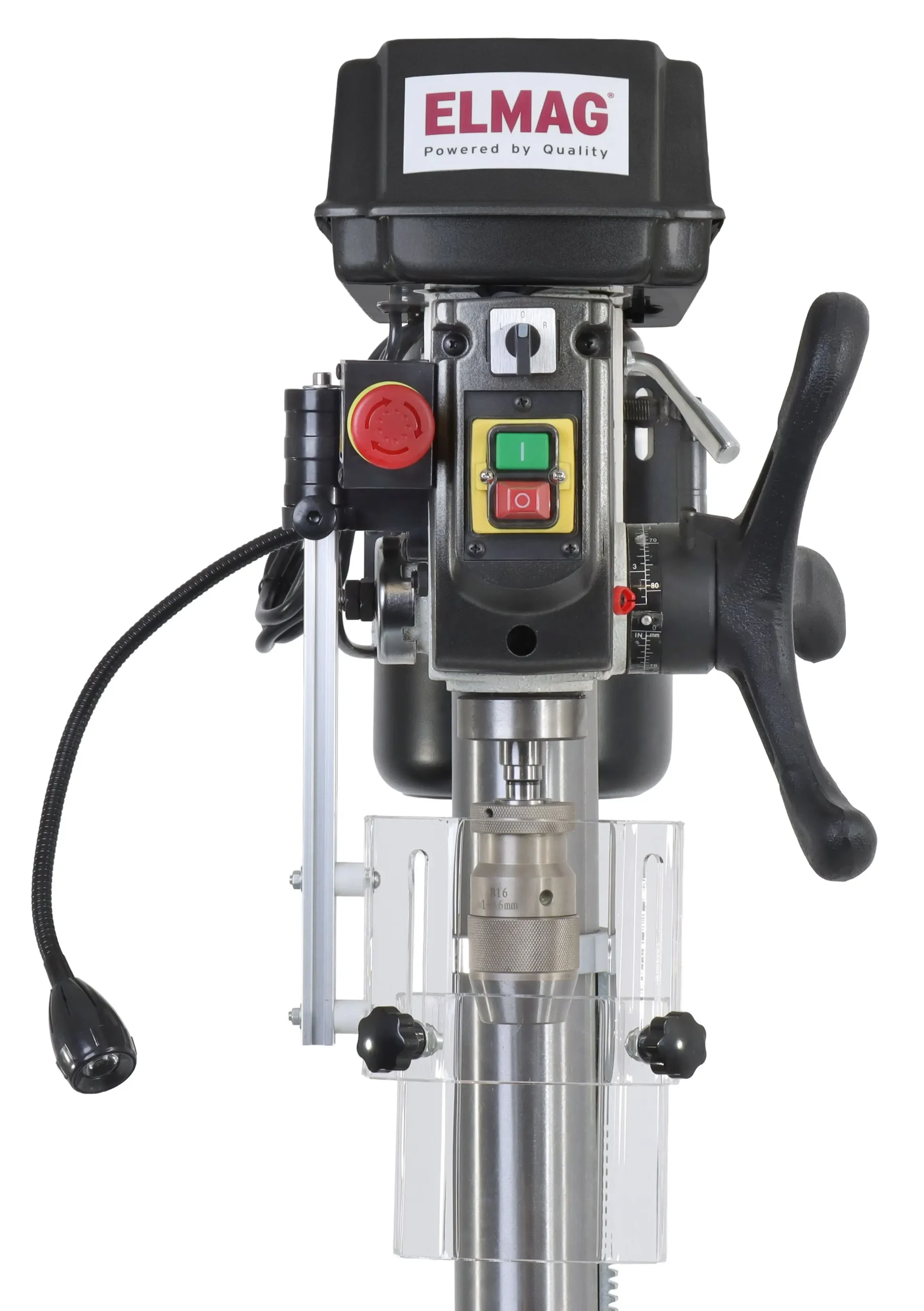
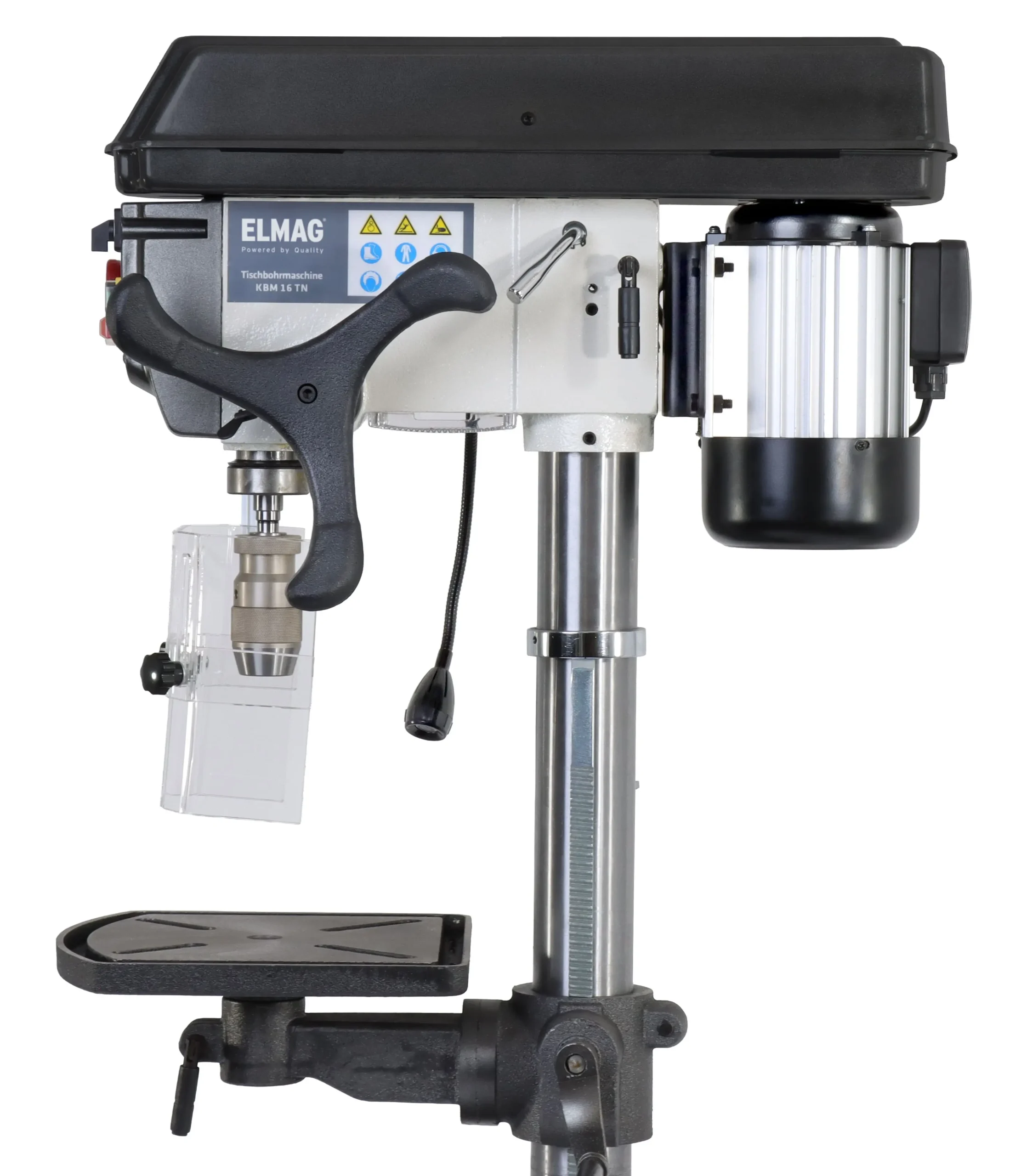
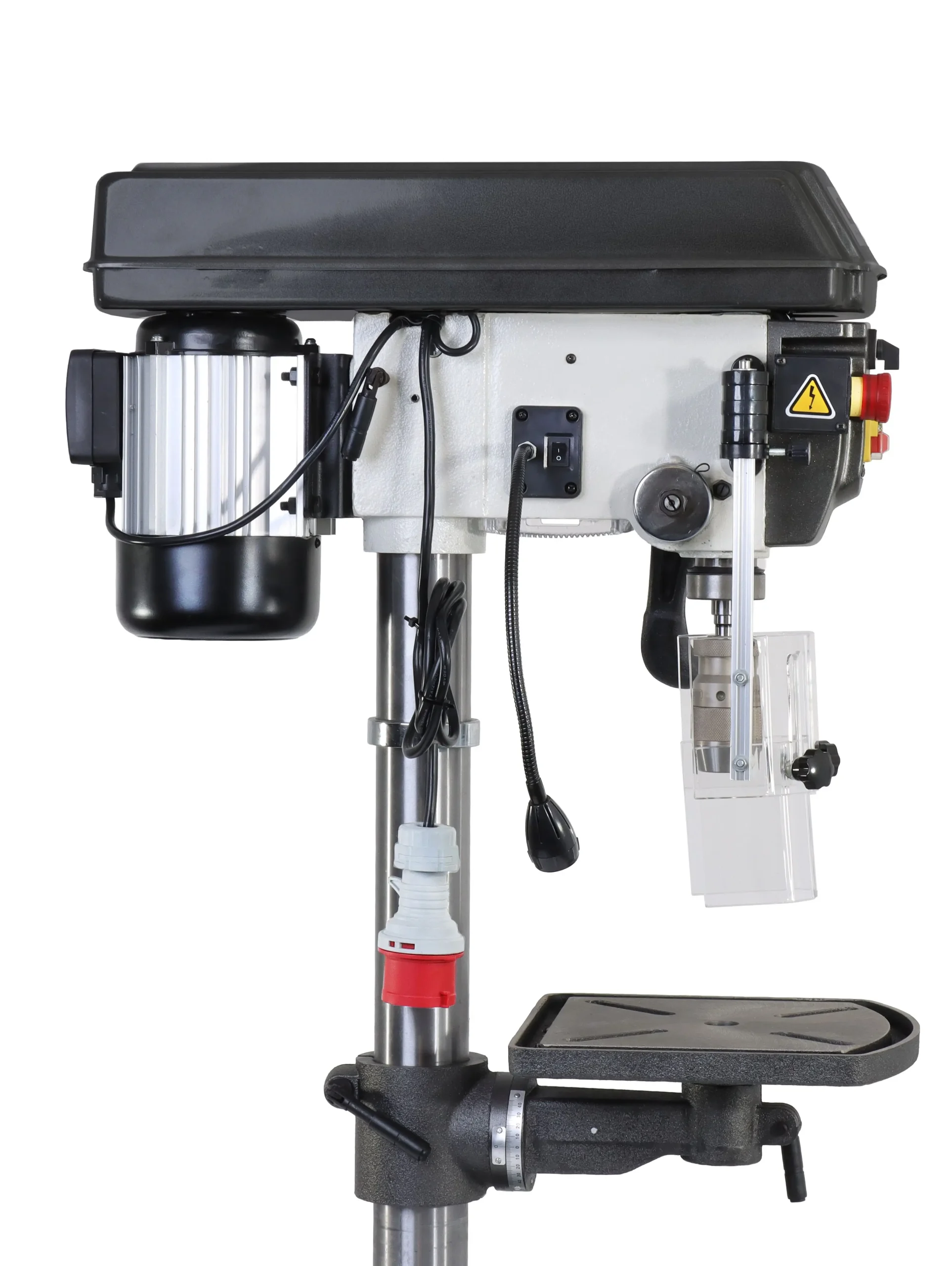
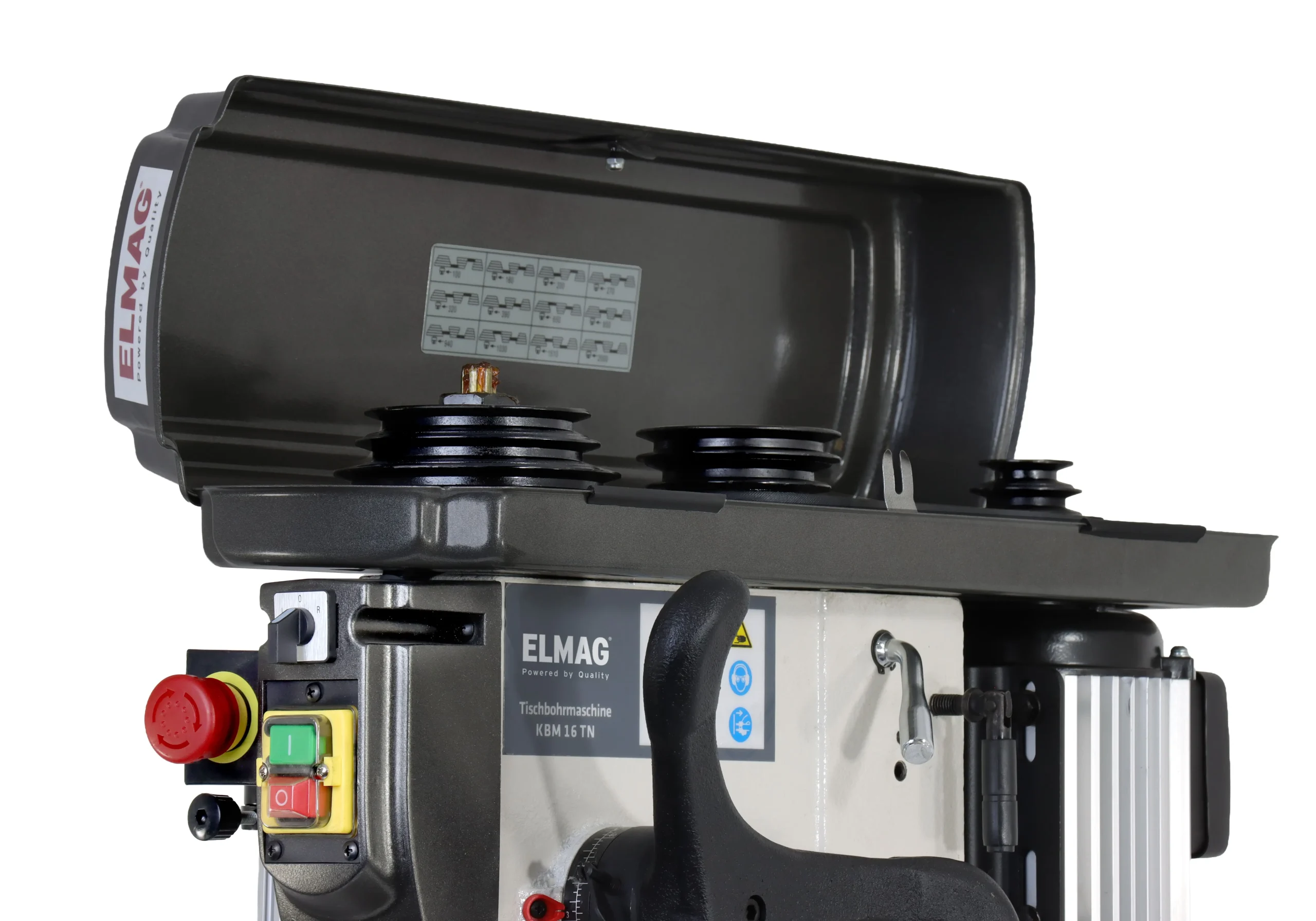
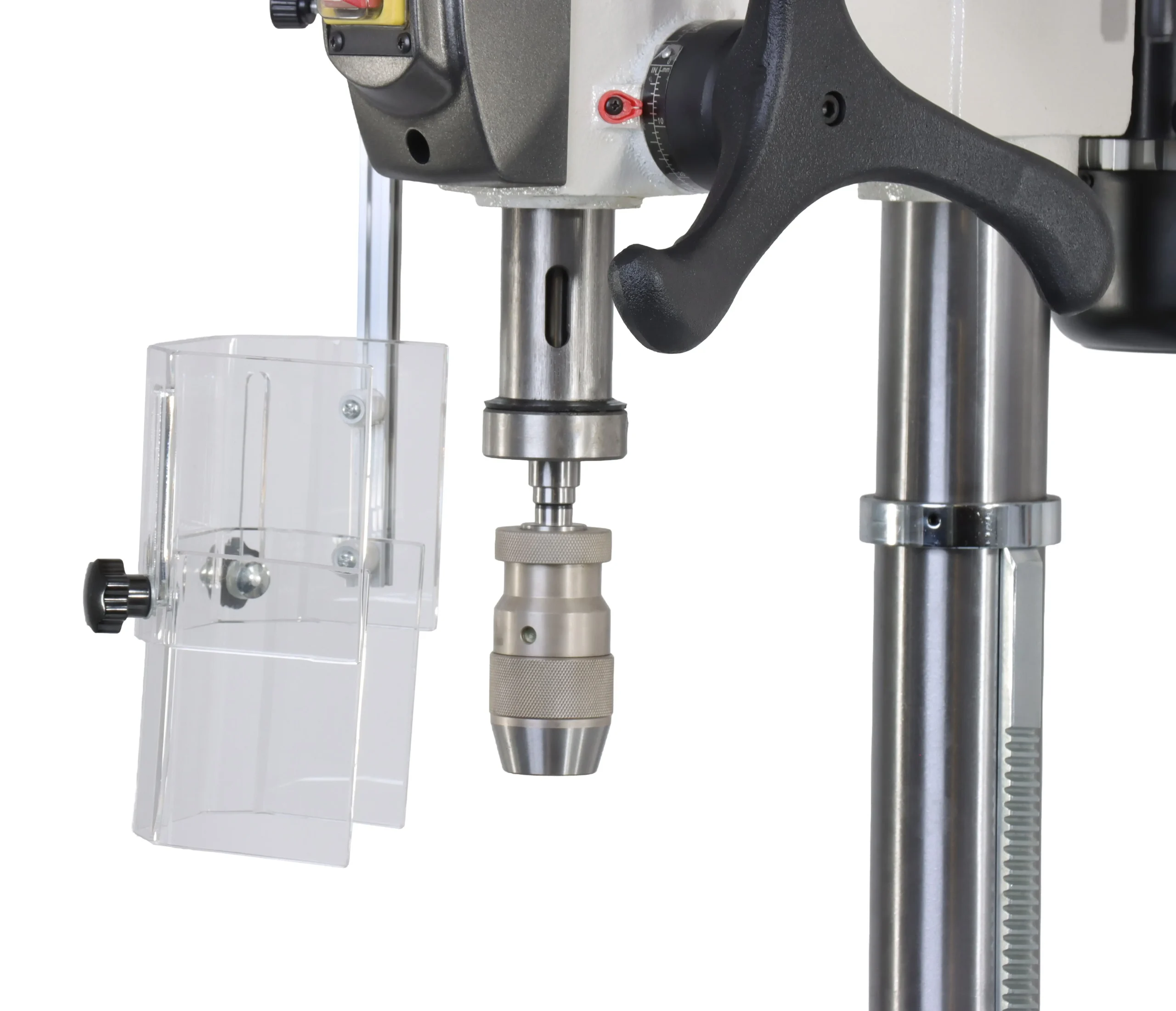

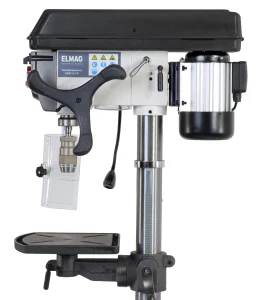
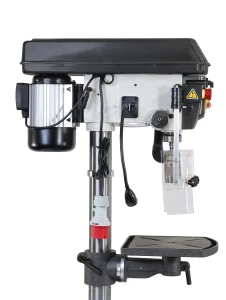
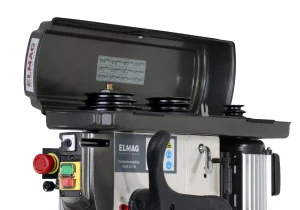
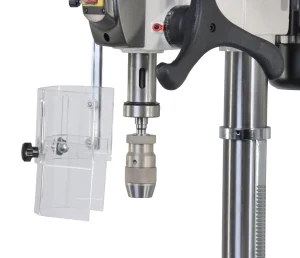
Drilling Machine ELMAG KBM 16TN
- Drilling capacity in steel; 16 mm
- Taper in quill MK-2
- Overhang: 195 mm
- Revolutions: 100 - 2000 rpm
- Spindle stroke: 80 mm

Lowest price in the last 30 days: 819,84 €!
Shipping is not included in the price.
Available on backorder
 For all orders over €200, we will give you free shipping!

23.11.2026
Short product description
- Drilling capacity in steel; 16 mm
- Taper in quill MK-2
- Overhang: 195 mm
- Revolutions: 100 - 2000 rpm
- Spindle stroke: 80 mm
Product description
Advantages:
- The compact desktop drilling machines KBM 16 TN are equipped with a proven drive system featuring a powerful quality motor and belt drive. By using precision bearings, a high rotation accuracy is achieved.
- With a drilling capacity in steel of 16 mm, these models are suitable for ambitious model makers and hobby craftsmen, as well as for anyone who values a professionally equipped workshop.
- Tip: Ideal price in a set.
Standard equipment:
- Self-tightening drill chuck B 16, 1–16 mm
- LED lighting
- Right/left turn
- Taper shank MK 2 / B 16
- Ejector wedge
- Tool set
- Operating instructions / CE
Technical data:
| Drilling capacity in steel | 16 mm |
| Spindle mount (drill spindle) | MK 2 |
| Speed range | 100–2000 rpm |
| Number of speed levels | 12 |
| Drilling stroke | 80 mm |
| Slots in the drill table | 16 mm |
| Drill table stroke | 360 mm |
| Overhang | 195 mm |
| Tilt of the drill table | ± 45° |
| Rotation of the drill table | ± 180° |
| Distance from quill to table | 110–470 mm |
| Drill table size | 300 x 310 mm |
| Motor power | 550 W |
| Power supply | 400/50 V/Hz |
| Dimensions | 300 x 310 x 680 mm |
| Base area | 285 x 495 mm |
| Machine height | 1070 mm |
| Weight | 56 kg |
This is how professionals drill
1. Drill selection: For metals: use high-performance high-speed steel (HSS) metal drills. For hard metals or stainless steel: metal drills with a titanium coating or made from cobalt alloy.
2. Marking: Mark the drilling point with a marking pen. Align a hardened marking drill and mark the drilling point with a short hammer tap – this way the drill doesn't slip. For HSS drills with cross grinding, marking isn't necessary. For large drilling diameters, pre-drill first with a smaller drill bit.
3. Rotation speed: To avoid damaging the drill bit, rotate hard metals at a low speed and with light pressure. For softer metals, use a higher speed. Reduce pressure before breaking through.
4. Drill cooling: Drill cooling. During long drilling sessions, frequently lift the drill and supply cooling liquid, and pause drilling if necessary.
Video
You may also be interested in
-

ELMAG KBM 25S Vario drilling machine
Na zalogi pri dobaviteljuDostava v 7-15 delovnih dneh.Drilling machine with stepless speed variationSpeed adjustment with leverSpeed adjustment with variable pulleys - PIV driveDigital display of speedTelescopic drill guardAdjustable LED lampRotation to the right and leftStandard equipment:- self-tightening drill chuck B16 / 1-16 mm- drill chuck arbor MK3 / B16- knockout wedge- handy toolDrilling capacity in steel (mm): 25Taper in spindle: MK 3Drilling stroke (mm): 150Overhang (mm): 215Column diameter (mm): 80Speed range (rpm): 440 - 2,200Number of speed stages: steplessMotor power (W): 1,500Table size (mm): 356 x 356Drill table stroke (mm): 475Drill table tilt: +- 45°Drill table rotation: +- 180°Height of spindle above table (mm): 365Electrical connection: 400 VMachine height (mm): 1,820Weight: 95 kg
1.384,70 € -
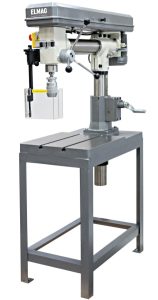
Elmag RKBM 16 T
Na zalogi pri dobaviteljuDostava v 7-15 delovnih dneh.Drilling capacity in steel: 16 mm Taper in spindle MK-2 Overhang: 160 - 520 mm Revolutions: 190 - 2800 rpm Spindle stroke: 80 mm
4.727,50 €3.599,00 € -

ELMAG KBM 32SN drilling machine
Na zalogi pri dobaviteljuDostava v 7-15 delovnih dneh.Drilling capacity in steel: 32 mm Taper in quill MT 4 Overhang: 230 mm Rotational speed: 80 - 1700 rpm Spindle stroke: 120 mm
1.366,40 € -

ELMAG KBM 25TN drilling machine
Na zalogi pri dobaviteljuDostava v 7-15 delovnih dneh.standard equipment:- drill chuck B16 1-16 mm- arbor MK 3 / B16- knockout wedge- handy tools* Drilling capacity fi 25 mm* Cubic capacity 300 x 310 x 680 mm* Overhang 195 mm* Drive motor with smooth operation 1100 W* model with high torque, 16 speed levels 100 - 2,000 RPM, ideal low speeds for hard workpieces* Drive via high-quality belt* Drill spindle with precise bearing* with left and right rotation* Drill spindle protection* Depth scale and depth stop* Drill table with T-slots, tiltable, swivel, and height adjustable* Ground steel column with rack* with drill table illumination* Base plate with clamping slots* Safety switch with undervoltage protectionSpecificationsQuill taper: MK-3Speed range (RPM): 100-2000Number of steps: 16Drill travel: 80T-slot/width (mm): 16Drill table travel (mm): 360Overhang (mm): 195Drill table - tilt: +- 45°Drill table - swivel: +- 180°Distance from spindle to table (mm): 110-470Table size (mm): 505×345Motor power (W): 1100Connection (V/Hz): 400/50-60Height (mm): 1,150 mmWeight (kg): 72
906,46 € -

Drilling Machine ELMAG KBM 25SN
Na zalogi pri dobaviteljuDostava v 7-15 delovnih dneh.Drilling capacity in steel: 25 mm Spindle taper MK 3 Overhang: 213 mm Rotational speed: 100 - 2000 rpm Spindle travel: 80 mm
1.076,04 € -

ELMAG KBM 16SN drilling machine
 Na zalogiDostava v 3 delovnih dneh.
Drilling capacity in steel: 16 mm Taper in quill MK-2 Overhang: 195 mm Revolutions: 100 - 2000 rpm Spindle stroke: 80 mm
890,60 € -

Drilling machine ELMAG KBM 16 TVario
Na zalogi pri dobaviteljuDostava v 7-15 delovnih dneh.Drilling capacity in steel: 16 mm Taper in the spindle MK-2 Overhang: 150 mm Rotations: 340 - 2200 rpm Spindle stroke: 90 mm
547,78 € -

ELMAG KBM 13TN Drill Machine
Na zalogi pri dobaviteljuDostava v 7-15 delovnih dneh.Drilling capacity in steel: 13 mm Taper in quill MK-2 Overhang: 127 mm Speed: 500 - 2500 rpm Spindle stroke: 60 mm
529,48 € -

Drilling Machine ELMAG KBM 25S-I VARIO-SET
Na zalogi pri dobaviteljuDostava v 7-15 delovnih dneh.Drilling capacity in steel: 25 mm Spindle taper MK-2 Overhang: 200 mm Speeds: 10 - 2100 rpm Spindle stroke: 100 mm
3.409,90 €2.548,99 € -
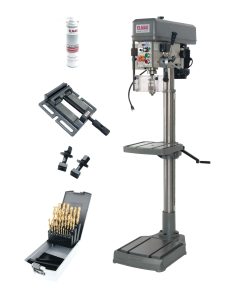
ELMAG KBM 32 I VARIO - SET Drilling Machine
Na zalogi pri dobaviteljuDostava v 7-15 delovnih dneh.Drilling capacity in steel: 32 mm Taper in spindle MK 3 Overhang: 245 mm Speed: 10 - 2100 rpm Spindle stroke: 135 mm
4.654,30 €3.538,00 € -

ELMAG KBM 15 TVario Drilling Machine - Set
Na zalogiDostava v 3 delovnih dneh.Drilling capacity in steel: 15 mm Morse taper in spindle: MT-2 Throat depth: 130 mm Speeds: 440 - 2600 rpm Spindle stroke: 60 mm
463,60 €315,00 € -

ELMAG KBM 25S Vario Drill Machine - Set
Na zalogiDostava v 3 delovnih dneh.Drilling capacity in steel: 25 mm Taper in spindle MK-3 Overhang: 215 mm Speed: 440 - 2200 rpm Spindle stroke: 150 mm
1.488,40 €1.089,00 €
Best Seller
-

ELMAG KBM 16 TVario Drill Machine - Set
Na zalogiDostava v 3 delovnih dneh.Drilling capacity in steel: 16 mm Taper in spindle MK-2 Overhang: 150 mm Speeds: 340 - 2200 rpm Spindle travel: 90 mm
631,96 €499,00 € -

Drilling Machine ELMAG KBM 16TN - Set
Na zalogiDostava v 3 delovnih dneh.Drilling capacity in steel; 16 mm Spindle taper MT-2 Overhang: 195 mm Speed: 100 - 2000 rpm Spindle stroke: 80 mm
957,70 €699,00 € -

Drilling Machine ELMAG KBM 25TN - Set
Na zalogiDostava v 3 delovnih dneh.Drilling capacity in steel: 25 mm Spindle taper MK 3 Overhang: 195 mm Speed: 100 - 2000 rpm Spindle stroke: 80 mm
1.124,84 €899,01 € -
Drilling Machine ELMAG KBM 25S-I VARIO-SET
Na zalogi pri dobaviteljuDostava v 7-15 delovnih dneh.Drilling capacity in steel: 25 mm Spindle taper MK-2 Overhang: 200 mm Speeds: 10 - 2100 rpm Spindle stroke: 100 mm
3.409,90 €2.548,99 € -
ELMAG KBM 32 I VARIO - SET Drilling Machine
Na zalogi pri dobaviteljuDostava v 7-15 delovnih dneh.Drilling capacity in steel: 32 mm Taper in spindle MK 3 Overhang: 245 mm Speed: 10 - 2100 rpm Spindle stroke: 135 mm
4.654,30 €3.538,00 € -
ELMAG KBM 25S Vario Drill Machine - Set
Na zalogiDostava v 3 delovnih dneh.Drilling capacity in steel: 25 mm Taper in spindle MK-3 Overhang: 215 mm Speed: 440 - 2200 rpm Spindle stroke: 150 mm
1.488,40 €1.089,00 € -
ELMAG KBM 15 TVario Drilling Machine - Set
Na zalogiDostava v 3 delovnih dneh.Drilling capacity in steel: 15 mm Morse taper in spindle: MT-2 Throat depth: 130 mm Speeds: 440 - 2600 rpm Spindle stroke: 60 mm
463,60 €315,00 € -
ELMAG KBM 25S Vario drilling machine
Na zalogi pri dobaviteljuDostava v 7-15 delovnih dneh.Drilling machine with stepless speed variationSpeed adjustment with leverSpeed adjustment with variable pulleys - PIV driveDigital display of speedTelescopic drill guardAdjustable LED lampRotation to the right and leftStandard equipment:- self-tightening drill chuck B16 / 1-16 mm- drill chuck arbor MK3 / B16- knockout wedge- handy toolDrilling capacity in steel (mm): 25Taper in spindle: MK 3Drilling stroke (mm): 150Overhang (mm): 215Column diameter (mm): 80Speed range (rpm): 440 - 2,200Number of speed stages: steplessMotor power (W): 1,500Table size (mm): 356 x 356Drill table stroke (mm): 475Drill table tilt: +- 45°Drill table rotation: +- 180°Height of spindle above table (mm): 365Electrical connection: 400 VMachine height (mm): 1,820Weight: 95 kg
1.384,70 € -
Elmag RKBM 16 T
Na zalogi pri dobaviteljuDostava v 7-15 delovnih dneh.Drilling capacity in steel: 16 mm Taper in spindle MK-2 Overhang: 160 - 520 mm Revolutions: 190 - 2800 rpm Spindle stroke: 80 mm
4.727,50 €3.599,00 € -
ELMAG KBM 32SN drilling machine
Na zalogi pri dobaviteljuDostava v 7-15 delovnih dneh.Drilling capacity in steel: 32 mm Taper in quill MT 4 Overhang: 230 mm Rotational speed: 80 - 1700 rpm Spindle stroke: 120 mm
1.366,40 € -

Drilling Machine ELMAG KBM 13TN - Set
Na zalogi pri dobaviteljuDostava v 7-15 delovnih dneh.Drilling capacity in steel: 13 mm Taper in quill MK-2 Overhang: 127 mm Revolutions: 500 - 2500 rpm Spindle stroke: 60 mm
633,18 €3,66 € -
ELMAG KBM 25TN drilling machine
Na zalogi pri dobaviteljuDostava v 7-15 delovnih dneh.standard equipment:- drill chuck B16 1-16 mm- arbor MK 3 / B16- knockout wedge- handy tools* Drilling capacity fi 25 mm* Cubic capacity 300 x 310 x 680 mm* Overhang 195 mm* Drive motor with smooth operation 1100 W* model with high torque, 16 speed levels 100 - 2,000 RPM, ideal low speeds for hard workpieces* Drive via high-quality belt* Drill spindle with precise bearing* with left and right rotation* Drill spindle protection* Depth scale and depth stop* Drill table with T-slots, tiltable, swivel, and height adjustable* Ground steel column with rack* with drill table illumination* Base plate with clamping slots* Safety switch with undervoltage protectionSpecificationsQuill taper: MK-3Speed range (RPM): 100-2000Number of steps: 16Drill travel: 80T-slot/width (mm): 16Drill table travel (mm): 360Overhang (mm): 195Drill table - tilt: +- 45°Drill table - swivel: +- 180°Distance from spindle to table (mm): 110-470Table size (mm): 505×345Motor power (W): 1100Connection (V/Hz): 400/50-60Height (mm): 1,150 mmWeight (kg): 72
906,46 €
